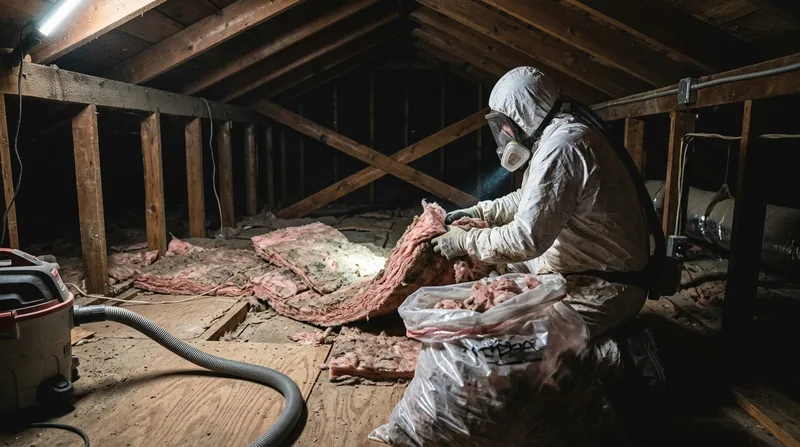




Insulation Removal in Bowling Green is the foundation of every retrofit that matters. Mid-century ranches across town have attics where fiberglass has flattened to nothing, crawl spaces clogged with wet cellulose, and walls packed with insulation that stopped working years ago. Before we spray new foam, we remove what is already there, haul it out, and leave you with a clean substrate ready for proper air sealing and thermal control. This is not a glamorous step, but it is the step that separates a retrofit that holds from one that fails. Bowling Green's climate, with hot humid summers driving moisture inward through vented attics and cold snaps reversing that flow, demands that we start fresh. We have been doing this work since 2011, and we know exactly what fails in Warren County housing stock and why.
Why Insulation Removal Matters in Bowling Green's Aging Housing Stock
Bowling Green's residential landscape is split between older homes near Fountain Square and Western Kentucky University, many now student rentals with bare subfloors and cavity walls that have never been sealed, and mid-century ranches scattered through town whose original attic insulation has compressed into a thin mat that provides almost no R-value in summer heat. When fiberglass or cellulose loses its loft, it stops insulating. Moisture accumulates in crawl spaces dug into the region's limestone and karst terrain, and it stays there long after rain passes. Vented attics in this climate zone 4A mixed-humid region run hot through the summer and cold through winter, driving heating and cooling bills higher every year. Removing that failed insulation before installing new foam is not optional, it is mandatory if you want the retrofit to work.
- We remove flattened fiberglass and cellulose from attics before spraying closed cell or open cell foam to restore R-value and air sealing.
- We extract wet or contaminated insulation from crawl spaces near Fountain Square and throughout Bowling Green to eliminate moisture traps before new foam goes down.
- We clear wall cavities of failed insulation in pre-1980 homes so injection foam can be sprayed into clean, dry walls without voids or settling.
- We haul all debris off site and dispose of it properly, leaving your attic or crawl space ready for the next phase.
Removal is the honest starting point of every retrofit that holds in Bowling Green's climate.
Local example: A ranch on Fairview Avenue in Bowling Green had six inches of fiberglass in the attic, compressed to two inches by weight and humidity over twenty years. Cooling bills had climbed past $180 a month in July. We removed the failed insulation, sealed all penetrations and rim joists, and sprayed closed cell foam. The homeowner cut summer cooling costs by 35 percent and eliminated the attic as a heat source.
For more on how new foam performs after removal, see our Attic Spray Foam Insulation page.
How We Remove Insulation in Bowling Green: Step by Step
Insulation removal is straightforward work, but it demands planning and the right equipment. We assess the attic or crawl space, identify what is there (fiberglass, cellulose, old foam, or a mix), check for moisture and contamination, and set up containment and ventilation so dust does not spread through your home. We use industrial vacuums and hand tools to pull material down, bag it, and haul it to a licensed disposal facility. The whole process takes a few hours for a typical attic, longer for larger spaces or heavily contaminated crawl spaces. Once the old insulation is out, we inspect the substrate, seal any gaps or cracks, and prepare for the new foam installation.
- We inspect the space and identify the insulation type, moisture condition, and any contamination before we start.
- We seal air leaks and ducts to prevent dust from entering your living space during removal.
- We use commercial-grade vacuums and equipment to extract old insulation and contain debris on site.
- We bag all material and transport it to a licensed disposal facility, leaving your attic or crawl space clean and ready.
- We photograph the bare substrate and note any repairs needed before foam installation can proceed.
A clean substrate is the foundation of a successful retrofit in Bowling Green's hot, humid climate.
Example from Plano: A crawl space beneath a ranch in Plano had three feet of wet cellulose that had absorbed moisture from the limestone subgrade. The insulation was matted, moldy, and useless. We removed all of it, dried the crawl space, sealed the foundation cracks, and sprayed closed cell foam on the band joist and subfloor. The homeowner reported no more dampness, no more musty smell, and a dry basement for the first time in years.
Learn more about how Crawl Space Spray Foam Insulation protects Bowling Green homes after removal.
Removal Methods and Best Fit for Your Bowling Green Home
| Approach | Description | Best for |
|---|---|---|
| Attic Removal | Vacuum extraction of flattened fiberglass or cellulose from accessible attics with containment and dust control. | Mid-century ranches and two-story homes near Fountain Square with vented attics and failed insulation. |
| Crawl Space Removal | Extraction of wet, matted, or contaminated insulation from crawl spaces dug into limestone and karst terrain. | Homes in Bowling Green, Smiths Grove, and Plano with damp crawl spaces and failed cellulose or fiberglass. |
| Wall Cavity Clearing | Removal of loose fill or settled insulation from closed wall cavities before injection foam retrofit. | Pre-1980 homes in student rental areas and historic neighborhoods where walls need new insulation without demolition. |
| Garage and Metal Building Clearing | Removal of old fiberglass or foam from uninsulated garage ceilings and metal building interiors. | Garages, shops, and barndominiums across Warren County that need condensation control and thermal performance. |
Insulation Removal Cost in Bowling Green: What to Expect
Insulation removal costs in Bowling Green depend on the size of the space, what is already there, and how much contamination or moisture is present. A typical attic removal starts at $950 and moves up based on square footage, access difficulty, and disposal volume. Crawl space removal runs higher because the work is slower, the space is confined, and moisture cleanup adds time. Wall cavity clearing for injection foam retrofit is usually a smaller job and falls in the mid-range. We provide written estimates with R-value and thickness specs so you know exactly what removal costs and what new foam will deliver. Getting two or three estimates is smart so you can compare scope and price, but the cheapest bid is often the one that cuts corners on containment, ventilation, or disposal.
See our full pricing overview for detailed breakdowns and what moves costs up or down.
What to Look for When Hiring a Spray Foam Insulation Contractor Near Me in Bowling Green
Hiring the right contractor for insulation removal is as important as hiring the right one for foam installation. The trade includes local shops like ours, national franchises, and rig-and-run crews that spray in an afternoon and disappear when the smell will not go away or the foam fails. A good contractor in Bowling Green will be fully insured, will provide a written estimate that names the R-value and thickness of new foam, will explain what permits apply at your address, and will be reachable after the job is done. Ask for references from homes in Bowling Green or nearby towns like Smiths Grove or Plano. Understand that building code compliance, thermal barriers, and ignition barriers are governed by your local building department, not the contractor, so verify what applies at your address before you sign. If you have an HOA, check whether exterior work on a metal building or addition requires approval.
- Verify that the contractor is fully insured and ask to see a current certificate of insurance with your address as the location.
- Request a written estimate that includes R-value, foam thickness, and the removal scope so you know what you are paying for.
- Ask for references from homes in Bowling Green or surrounding areas and actually call them to ask about the experience.
- Confirm what permits or registrations apply at your address by contacting your local building department, not the contractor.
- Understand that any thermal barrier or ignition barrier requirement is set by code, not by the contractor's preference, so ask your building official.
- If you have an HOA, check your architectural guidelines before scheduling work on exterior surfaces or metal buildings.
The right contractor will answer these questions clearly and will be happy to help you verify what applies to your job.
Ready to start? Contact us for a free estimate, or call (270) 495-6158 for a conversation about your insulation removal and retrofit.
Insulation Replacement and Re-Insulation is our next step once removal is complete.
Insulation Removal in Bowling Green: Pricing Guide
| Service | Price | Details |
|---|---|---|
| Attic Removal | Starting at $950 | Fiberglass or cellulose extraction from typical 1,200 to 1,500 sq ft attic, containment and disposal included |
| Crawl Space Removal | Starting at $1,200 | Wet or matted insulation removal from confined crawl space, longer timeline due to moisture and access difficulty |
| Wall Cavity Clearing | Starting at $600 | Loose fill removal from closed wall cavities prior to injection foam retrofit, scope dependent on cavity condition |
| Garage or Metal Building | Starting at $800 | Old fiberglass or foam removal from uninsulated garage ceiling or metal building interior, disposal and cleanup included |
| Large or Complex Job | On estimate | Multi-space removal, heavy contamination, or difficult access requires on-site inspection before firm price |
| Free Estimate | No obligation | Written estimate with scope, price, and timeline within 24 hours, call (270) 495-6158 to schedule |
Indicative pricing, the exact cost depends on square footage, finish, and site access. Free personalized estimate within 24h at (270) 495-6158.


