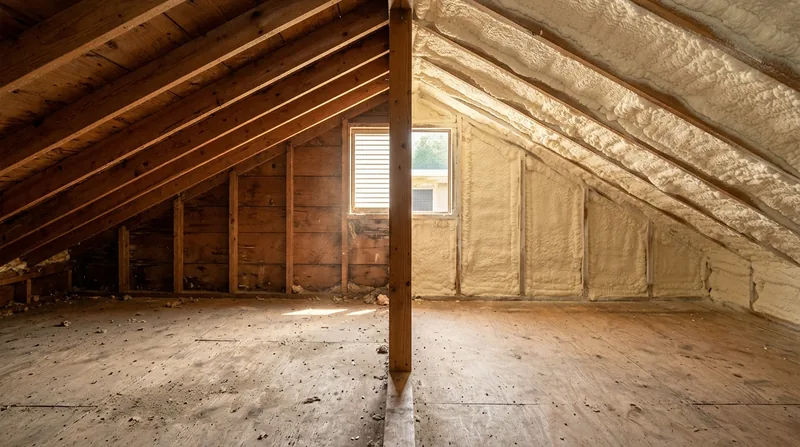




Insulation Replacement & Re-Insulation in Bowling Green is one of the most common retrofit jobs we perform, and for good reason. Homes across Bowling Green, from Fountain Square near Western Kentucky University to the mid-century ranches scattered through town to newer subdivisions pushing toward Alvaton, often have attic insulation that has flattened over decades or crawl spaces that were never properly insulated at all. The mixed-humid climate of IECC zone 4A means your attic runs hot and humid all summer, driving cooling costs through the roof, while winter cold snaps reverse the moisture flow and push warm indoor air straight through gaps at rim joists and top plates. When old fiberglass has settled into a thin mat or when a crawl space sits damp on limestone and karst terrain, replacement with spray foam and proper air sealing is the only way to stop the leak. We remove failed insulation and install new closed cell or open cell foam across attics, crawl spaces, and rim joists, paired with the air sealing that fiberglass alone cannot provide. Call us at (270) 495-6158 for a free written estimate with R-value and thickness specs, or visit our contact page to request one online.
Why Insulation Replacement Matters in Bowling Green's Climate
Bowling Green summers are hot and humid, and vented attics amplify that heat. Fiberglass batts and blown-in insulation settle and compress over time, losing R-value and leaving gaps at the top plates and around penetrations where air leaks straight into your living space. In winter, that same attic becomes a cold zone where warm indoor air meets the dew point inside walls and rim joists, causing condensation and eventual decay. Crawl spaces dug into the region's limestone terrain stay damp long after rain, and bare concrete with no vapor barrier or insulation becomes a source of moisture that migrates upward into floors and walls. Replacement insulation paired with air sealing stops both problems at once.
- We remove old, flattened, or failed insulation and haul it away, leaving a clean substrate for new foam.
- We seal air leaks at top plates, penetrations, and rim joists before or during foam installation to stop the root cause of energy loss.
- We install closed cell or open cell foam to the R-value and thickness required by code and your home's needs, with written specs on every estimate.
- We handle the moisture first or we walk away, meaning we do not spray over wet substrates, active leaks, or standing water in crawl spaces.
The result is lower heating and cooling bills, better humidity control, and no more cold floors or hot attics.
Key info: A home in Bowling Green with a vented attic and settled fiberglass loses energy through the roof all year. Spray foam and air sealing cut that loss by stopping the convection and air infiltration that fiberglass cannot address, which is why replacement insulation is often paired with sealed attic work in our estimates.
For details on how we handle the full scope of air sealing and foam installation, see our air sealing service page.
How Insulation Replacement Works: Our Process in Bowling Green Homes
Replacement insulation is a two-phase job: removal of the old material, then installation of new foam to spec. We start with a site inspection to identify what is in place, whether it is wet or contaminated, and what substrate we are working with. If the old insulation is sound and dry, we may recommend a top-up with blown-in or foam instead of full removal, which saves cost. If it is flattened, wet, or failing, we remove it entirely, haul it away, and start fresh. Once the space is clean and dry, we spray foam to the thickness and R-value your estimate specifies, with mechanical ventilation running during cure and a clear re-entry window of twenty-four to forty-eight hours.
- We inspect the existing insulation, substrate, and any moisture or damage before quoting removal and replacement.
- We remove old insulation and seal air leaks at the same time, so the space is ready for new foam without rework.
- We spray closed cell or open cell foam in controlled passes, maintaining the ratio and drum temperature that the manufacturer specifies.
- We run mechanical ventilation during cure, post a re-entry window on the job, and provide written documentation of R-value and thickness on completion.
In homes near Fountain Square or along College Street where older walls have never been insulated, we also offer wall and injection foam insulation to retrofit closed cavities without demolition.
Real example: A 1970s ranch in Plum Springs had a vented attic with 3 inches of flattened fiberglass and a damp crawl space with no insulation. We removed both, sealed the rim joist and band joist, installed 5.5 inches of closed cell foam in the attic, and 3 inches in the crawl space. The homeowner's summer cooling bill dropped and the crawl space stayed dry through the next rain cycle.
Insulation Replacement Methods: When to Use Closed Cell, Open Cell, or Blown-In
| Approach | Description | Best for |
|---|---|---|
| Closed Cell Spray Foam | High-density foam (3.5 to 3.6 lb/cu ft) that creates a vapor barrier and air seal in one pass. R-value approximately 6 to 6.5 per inch. | Crawl spaces and rim joists in damp terrain, sealed attics, metal buildings, and any space where moisture control and structural rigidity matter. |
| Open Cell Spray Foam | Low-density foam (0.4 to 0.5 lb/cu ft) that is permeable and lighter. R-value approximately 3.5 to 3.7 per inch. Requires a separate vapor barrier in cold climates. | Vented attics where ventilation remains active, sound dampening in garage ceilings, and retrofit applications where weight is a concern. |
| Blown-In Insulation (Fiberglass or Cellulose) | Loose-fill material blown into cavities. No air sealing on its own, settles over time. Lower cost than foam. | Top-up of a sound vented attic with no air leak problems, or budget-constrained attic work where the existing structure is solid and only R-value is needed. |
| Removal and Replacement | Complete removal of old insulation, cleanup, and installation of new foam or blown-in material to spec. | Flattened, wet, or contaminated insulation, crawl spaces with no prior insulation, and any job where a clean start is required. |
The choice between closed cell and open cell is driven by use, not by price. If your attic is vented and your goal is to add R-value to a sound structure, open cell or blown-in is often the right answer and we will say so. If your crawl space is damp, your rim joist is exposed to weather, or you are sealing an attic to stop air leaks, closed cell is the correct choice. For details on each method, see our closed cell spray foam page and open cell spray foam page.
Insulation Replacement & Re-Insulation Cost in Bowling Green: What to Expect
Insulation replacement jobs in Bowling Green typically start at $2,800 for a straightforward attic or crawl space removal and new foam installation. The final cost depends on the size of the space, the R-value and thickness specified, access difficulty, whether the substrate is wet or contaminated, and whether removal is required. A small attic top-up with blown-in insulation will be lower. A full crawl space removal and closed cell foam installation, or a multi-zone job combining attic and rim joist work, will be higher. Travel is included in our service area across Bowling Green and surrounding towns, with no separate mileage fee.
The best way to know your cost is to request a free written estimate. We will inspect the space, measure it, and provide a quote with R-value and thickness specs so you know exactly what you are paying for. Visit our pricing page for more detail on what affects the final number, or call us at (270) 495-6158 to schedule an estimate.
What to Look for When Hiring an Insulation Replacement Contractor Near Me in Bowling Green
Not all spray foam installers are the same. The market includes both local shops and national franchises, and the difference shows in the estimate, the installation, and what happens after the job is done. A good estimate includes R-value and thickness specs, not just a price. A good installer runs mechanical ventilation during cure, posts a clear re-entry window, and can verify that the material and ratio match the manufacturer specs. A bad installer promises immediate re-entry, offers a price far below market with no inspection, or cannot provide proof of insurance. Before you book, ask for references, check that the contractor is fully insured, and verify any certifications they claim. If you are in a HOA or have an older home with architectural restrictions, check whether exterior work or attic venting changes require approval. For permit questions specific to your address in Bowling Green, contact the City of Bowling Green Planning and Development Department. Call us at (270) 495-6158 or visit our contact page to request a free estimate and verify our insurance.
Insulation Replacement & Re-Insulation in Bowling Green: Pricing Guide
| Service | Price | Details |
|---|---|---|
| Attic Removal & Replacement | Starting at $2,800 | Includes removal of old insulation, air sealing at top plates and penetrations, and new closed cell or open cell foam to spec |
| Crawl Space Insulation & Sealing | Starting at $3,200 | Includes removal of old material if present, substrate inspection for moisture, closed cell foam on walls and band joist, and rim joist sealing |
| Multi-Zone Job (Attic + Crawl + Rim Joist) | Starting at $5,500 | Combines attic replacement, crawl space foam, and rim joist sealing in a single mobilization, reducing overall labor and travel cost |
| Blown-In Top-Up (Vented Attic Only) | Starting at $1,800 | For sound attics with settled insulation, blown-in fiberglass or cellulose added without removal, lowest-cost option when substrate is dry and intact |
| Travel & Estimate | Free | Included across Bowling Green and surrounding service areas, no mileage fee, written estimate with R-value and thickness specs within 24 hours |
Indicative pricing, the exact cost depends on square footage, finish, and site access. Free personalized estimate within 24h at (270) 495-6158.


