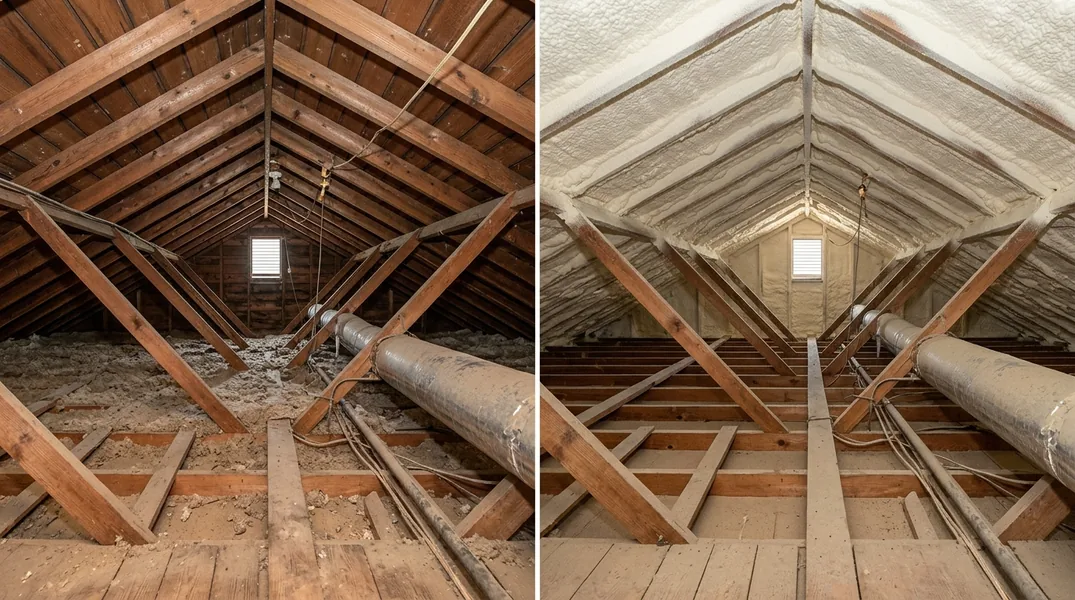
The Mid-Century Ranch Problem: Attic Insulation That Settles
Mid-century ranch homes are iconic in Bowling Green and throughout Kentucky. Built primarily between the 1950s and 1970s, these charming single-story residences offer open floor plans, clean lines, and an unmistakable vintage appeal. However, many of these homes share a common problem that homeowners discover only after years of high energy bills and uncomfortable temperature swings: the attic insulation has settled and flattened.
When insulation compresses over decades, it loses its thermal resistance value. This happens most frequently with traditional blown-in insulation materials, which rely on air pockets trapped within the material to provide insulation. As the material ages, vibrations from HVAC systems, temperature fluctuations, and simple gravity cause the fibers to compact. In a 50+ year old ranch home, this degradation can be severe enough that the insulation performs at only 30 to 50 percent of its original R-value. The result is that your heating and cooling system must work harder to maintain comfortable temperatures, driving up utility costs and reducing the lifespan of your equipment.
Spray Foam vs. Blown-In Insulation: Why Spray Foam Wins for Aging Attics
When comparing spray foam vs. blown-in insulation, the differences become clear when you consider long-term performance in older homes. Blown-in insulation, typically made from cellulose, fiberglass, or mineral wool, is installed by blowing loose material into the attic cavity. While this method is relatively affordable upfront, the material continues to settle over time. Additionally, blown-in insulation can develop gaps around irregular framing, pipes, and electrical boxes, creating thermal bridges where heat escapes in winter and enters in summer.
Attic Spray Foam Insulation works differently. When applied, the foam expands to fill every cavity, crack, and void in your attic space. It doesn't settle, compress, or shift over time. This expansion also creates an air seal, which means the foam simultaneously insulates and air-seals your attic. For homeowners in Bowling Green with aging mid-century ranches, this dual benefit is transformative. You're not just replacing lost R-value; you're also eliminating the air leaks that blown-in insulation cannot address.
Spray Foam vs. Fiberglass: Understanding the Durability Factor
Fiberglass batts have been a standard insulation choice for decades, and many mid-century homes were originally insulated with this material. When examining spray foam vs. fiberglass, the key difference lies in durability and performance retention. Fiberglass batts are laid between joists and rafters, but they too can settle, compress, and develop gaps. Fiberglass also absorbs moisture, which reduces its insulating properties and can create conditions favorable to mold growth in humid climates.
Spray foam, particularly Closed Cell Spray Foam Insulation, is moisture-resistant and maintains its R-value indefinitely. Closed cell foam has a density of approximately 1.5 to 2 pounds per cubic foot and offers an R-value of 6 to 7 per inch. It also provides structural reinforcement to your roof deck and resists settling completely. For homeowners tired of the cycle of replacing degraded fiberglass every 15 to 20 years, spray foam represents a permanent solution that will serve your home for decades without performance loss.
Best Insulation for Attic: Why Open Cell and Closed Cell Spray Foam Lead the Market
When researching the best insulation for attic applications, you'll encounter two types of spray foam: open cell and closed cell. Each has distinct advantages depending on your climate, budget, and specific attic conditions. Open Cell Spray Foam Insulation is lighter, less dense (approximately 0.5 pounds per cubic foot), and offers an R-value of 3.5 to 4 per inch. It's more affordable than closed cell and provides excellent sound dampening. Open cell foam is also vapor-permeable, which can be beneficial in certain climates where moisture management is important.
Closed cell spray foam, on the other hand, is denser, more rigid, and offers superior R-value and moisture resistance. In Kentucky's humid subtropical climate, closed cell foam often outperforms open cell because it actively resists moisture absorption. For mid-century ranches with aging roofs or potential moisture issues, closed cell foam provides better long-term protection. Both types outperform blown-in insulation and fiberglass in terms of durability, air sealing, and performance retention. The choice between them depends on your specific needs and budget, which is why a professional assessment is invaluable.
Spray Foam vs. Cellulose: Comparing Performance and Longevity
Cellulose insulation is often marketed as an eco-friendly alternative to fiberglass blown-in insulation. When evaluating spray foam vs. cellulose, it's important to understand that cellulose shares many of the same limitations as other blown-in materials. Cellulose is made from recycled paper and is treated with fire retardants, but it still settles over time and can absorb moisture. In humid environments like Kentucky, cellulose insulation is particularly vulnerable to moisture absorption, which compromises its R-value and creates conditions for mold and mildew growth.
Spray foam, by contrast, is inherently moisture-resistant and does not settle. While cellulose may be slightly cheaper initially, homeowners often find that the need to add more cellulose over time, combined with potential moisture and mold issues, makes it a more expensive choice over the life of the home. Spray foam requires no maintenance, provides permanent air sealing, and maintains its performance indefinitely. For homeowners committed to solving their attic insulation problem once and for all, spray foam is the superior investment.
Attic Spray Foam Insulation Cost in Bowling Green: What to Budget
Cost is a natural consideration for any home improvement project. Spray foam insulation typically costs more upfront than blown-in fiberglass or cellulose, but the long-term value is substantial. The exact pricing for your project depends on your attic size, the type of spray foam selected, and the complexity of your space. A typical mid-century ranch attic might range from $2,000 to $5,000 or more, depending on these factors. While this represents a significant investment, remember that spray foam eliminates the need for future re-insulation. It also reduces energy bills, often paying for itself within 5 to 7 years through lower heating and cooling costs.
To get an accurate estimate for your specific home, reach out to Bowling Green Spray Foam Insulation for a free estimate. Our team will assess your attic condition, discuss your goals, and provide a detailed quote with no obligation. You can also call us at (270) 495-6158 to discuss your project and learn more about how spray foam can transform your home's energy efficiency and comfort.
Taking Action: Professional Attic Spray Foam Insulation Near Me
If you own a mid-century ranch in Bowling Green and suspect your attic insulation has settled, now is the time to act. The longer you wait, the more energy you waste and the higher your utility bills climb. Professional installation of spray foam insulation is not a DIY project; it requires specialized equipment, training, and safety protocols. Improper application can result in inadequate coverage, poor air sealing, or safety hazards.
Bowling Green Spray Foam Insulation has the expertise and equipment to properly install spray foam in your attic, whether you choose open cell or closed cell. Our team understands the unique challenges of older homes and the importance of thorough air sealing and insulation coverage. We serve homeowners throughout Bowling Green and the surrounding communities. Don't let another season pass with a poorly insulated attic. Contact us today at (270) 495-6158 or visit our website to request your free estimate. We'll help you restore your home's energy efficiency and comfort for decades to come.
Looking for a professional spray foam insulation contractor in Bowling Green? Bowling Green Spray Foam Insulation responds fast for all your spray foam insulation needs.
Get a Free Quote