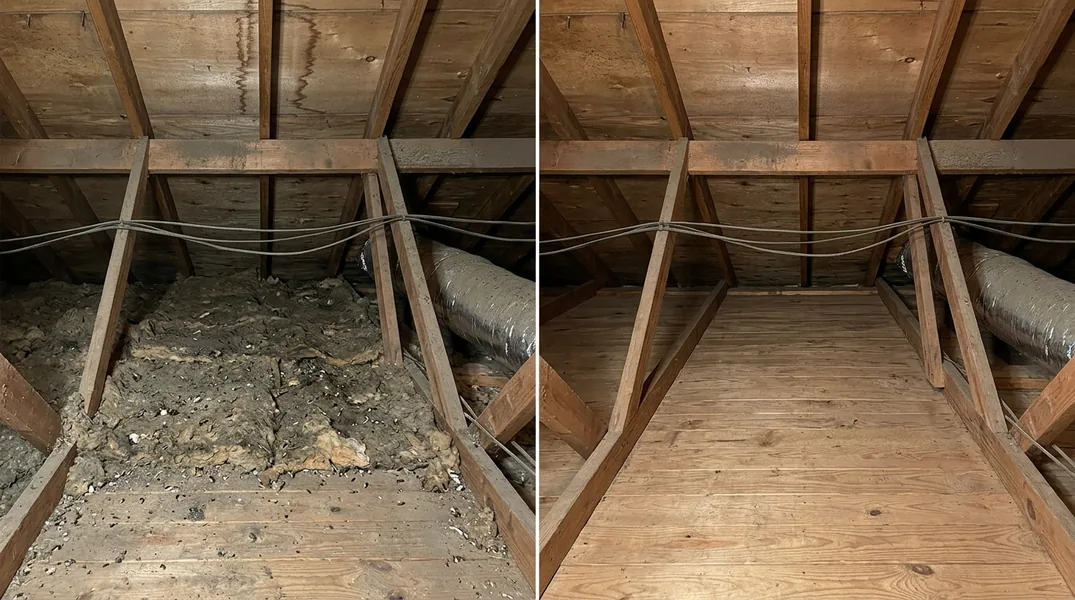
Why Student Rentals Near WKU Need Better Insulation
Western Kentucky University brings thousands of students to Bowling Green every year, and many live in older rental properties that were built decades before modern energy codes existed. These older homes and duplexes often have walls with minimal insulation, bare subfloors, and attics that lose heat faster than a leaky bucket loses water. For student renters, this means higher utility bills during winter months and uncomfortable living spaces year-round.
Property owners who manage student housing face a real challenge: how do you improve energy efficiency in a building that was never designed with today's standards in mind? Traditional fiberglass batts don't seal air leaks, and blown-in cellulose can settle unevenly over time. This is where Attic Spray Foam Insulation becomes a practical solution. Spray foam fills every crack, cavity, and void, creating an air-tight thermal barrier that fiberglass simply cannot match. For older student rental properties, this upgrade can reduce heating and cooling costs by 15 to 20 percent, which translates to real savings for both landlords and tenants.
Is Spray Foam Insulation Worth It for Older Walls?
The question of whether spray foam is worth the investment depends on your current insulation condition and long-term goals. In older rental properties near WKU, many walls were insulated (if at all) with fiberglass batts that have settled, compressed, or were never properly installed. Once fiberglass loses contact with the wall cavity, it loses much of its insulating value. Wall & Injection Foam Insulation solves this problem by filling the entire cavity without disturbing drywall or siding, meaning you can upgrade without a complete renovation.
The return on investment is strong for rental properties. Lower utility bills attract quality tenants, reduce tenant complaints about comfort, and can justify slightly higher rent. For property owners in Bowling Green managing multiple student rentals, the cumulative energy savings across several units adds up quickly. Most property owners see payback within 5 to 7 years, after which the improved insulation continues to save money for decades. Additionally, spray foam adds structural rigidity to walls and can improve sound dampening, which is a genuine benefit in multi-unit rental properties where noise between units is a common complaint.
Is Spray Foam Insulation Safe? Understanding Off-Gassing and Installation
Safety is a legitimate concern for anyone considering spray foam, especially in occupied rental properties where tenants will be living. The most common worry is off-gassing, which occurs when spray foam is freshly applied. During installation and for a short period afterward, isocyanates and other volatile organic compounds (VOCs) are released. This is why professional installers recommend that occupants leave the property for 24 to 48 hours after spray foam application, and why proper ventilation is essential during and immediately after the work.
Once spray foam has fully cured (typically within 24 hours), it becomes inert and poses no ongoing health risk. The foam is chemically stable and does not continue to release harmful gases. The key to safety is working with experienced, certified professionals who follow EPA guidelines and best practices. Bowling Green Spray Foam Insulation uses only high-quality materials and ensures proper ventilation during application. We always provide clear instructions to property managers and tenants about re-occupancy timing. If you're concerned about safety for your rental property, this is exactly the kind of question to discuss during your free estimate. Our team can walk you through the process and address any specific concerns about your property.
Spray Foam Insulation Problems and Pros and Cons
Like any building material, spray foam has both advantages and limitations worth understanding. On the pro side, spray foam provides superior air sealing, high R-value per inch, excellent performance in irregular cavities, and long-term durability. It doesn't settle, compress, or lose effectiveness over time the way fiberglass does. For older rental properties with bare subfloors and wall cavities of varying sizes, these benefits are substantial.
The main cons include higher upfront cost compared to traditional insulation, potential off-gassing concerns during installation (which we've addressed above), and the fact that spray foam is permanent. Once applied, it cannot be easily removed or modified. Some types of spray foam can absorb moisture if not properly installed, though high-quality closed-cell spray foam is naturally moisture-resistant. Closed Cell Spray Foam Insulation is ideal for areas prone to moisture or where vapor barriers are critical, such as basement walls or crawl spaces. Open Cell Spray Foam Insulation is more affordable and works well in interior walls where moisture is not a concern. Understanding which type suits your specific application is important, and that's something our team discusses with every property owner.
Tackling Bare Subfloors in Older Student Rentals
Bare subfloors are one of the biggest energy efficiency culprits in older rental properties. When there's no insulation between the subfloor and the space below (whether it's a crawl space, basement, or open air), cold air flows directly into the living space during winter. Tenants complain about cold floors, and heating costs spike. Traditional fiberglass batts between floor joists are better than nothing, but they require support, can sag over time, and don't seal air leaks around rim joists and band boards where heat loss is often greatest.
Spray foam insulation applied to subfloors creates a continuous thermal and air barrier that stops cold air at the source. The foam adheres directly to the underside of the subfloor and fills every gap around rim joists, pipes, and electrical penetrations. This approach is especially effective in older rental properties where subfloor construction is often uneven or where joists are spaced irregularly. The result is warmer floors, more consistent indoor temperatures, and noticeably lower heating bills. For property managers overseeing multiple older units near WKU, upgrading subfloor insulation is one of the highest-impact improvements available.
Spray Foam Insulation Cost in Bowling Green: What to Budget
Cost is always a consideration for property owners, and spray foam typically costs more per square foot than fiberglass or cellulose. However, the comparison should account for performance, longevity, and energy savings. For a typical older rental property with bare subfloors and underinsulated walls, spray foam installation might range from moderate to higher investment depending on the area to be covered and the type of foam selected. Open-cell spray foam is generally less expensive than closed-cell, making it a good choice for interior walls in dry applications. Closed-cell foam costs more but offers superior moisture resistance and higher R-value per inch, making it the better choice for subfloors, rim joists, and exterior walls.
Rather than guessing at cost, the best approach is to request a free estimate from Bowling Green Spray Foam Insulation. We'll evaluate your specific property, discuss your priorities, and provide transparent pricing based on the actual work required. Many property owners are surprised to find that when you factor in energy savings, improved tenant satisfaction, and the long lifespan of spray foam, the cost per year of ownership is very competitive. Call us at (270) 495-6158 to schedule a consultation and learn what spray foam insulation can do for your student rental property.
Looking for a professional spray foam insulation contractor in Bowling Green? Bowling Green Spray Foam Insulation responds fast for all your spray foam insulation needs.
Get a Free Quote