Understanding Zone 4A Climate Challenges in Bowling Green
Bowling Green sits squarely in USDA Hardiness Zone 4A, a region characterized by cold winters and humid summers that create unique challenges for homeowners. The average winter temperatures dip well below freezing, while summer humidity levels can climb uncomfortably high. This combination of cold and moisture creates an environment where traditional insulation materials often fall short, leading to energy inefficiency, moisture problems, and structural damage over time.
The humidity in Zone 4A is particularly problematic because it doesn't just affect your comfort. Moisture intrusion into walls, attics, and crawl spaces can lead to mold growth, wood rot, and the deterioration of conventional fiberglass or cellulose insulation. Homeowners in Bowling Green who rely on older insulation methods often find themselves dealing with rising energy bills, cold spots in their homes, and persistent dampness that no amount of dehumidifying can fully resolve. The root cause is that standard insulation doesn't create an effective moisture barrier, allowing humid air to penetrate and compromise the material's R-value.
Why Spray Foam Outperforms Traditional Insulation in Humid Climates
Closed Cell Spray Foam Insulation is engineered to address the exact problems that plague homeowners in Zone 4A. Unlike fiberglass batts or blown cellulose, spray foam creates a seamless, airtight barrier that seals every crack, crevice, and gap in your home's envelope. This continuous seal prevents warm, humid air from entering during summer and cold air from infiltrating during winter. The foam's closed-cell structure is inherently moisture-resistant, meaning it won't absorb water or degrade when exposed to the high humidity levels common in Bowling Green.
The superior R-value of spray foam also makes it a smart investment for Zone 4A homeowners. Closed-cell spray foam typically achieves an R-value of 6 to 7 per inch, compared to fiberglass at roughly 3.2 per inch. This means you need less material to achieve the same thermal protection, which is especially valuable in crawl spaces and attics where space is limited. When you combine the air-sealing properties with the high insulation value, spray foam delivers energy savings that compound year after year, making your heating and cooling systems work more efficiently regardless of the season.
Crawl Space Insulation: Why Spray Foam is the Best Choice
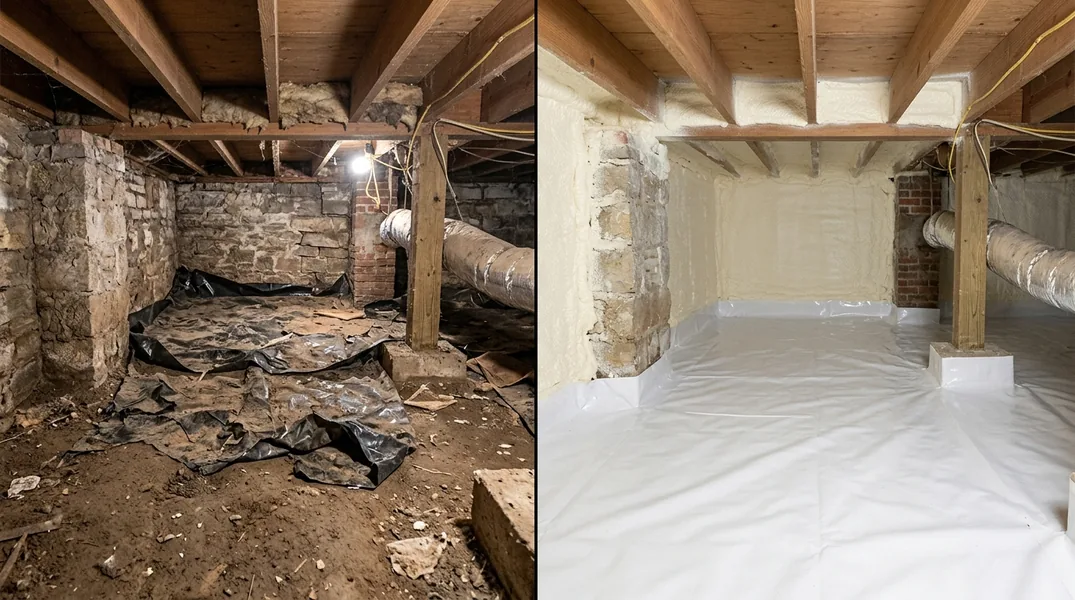
Crawl spaces are notorious problem areas in humid climates, and crawl space spray foam has become the gold standard solution for homeowners seeking to eliminate moisture and energy loss. Traditional crawl space insulation methods, such as laying fiberglass batts between floor joists, leave gaps and fail to address the moisture that naturally rises from the soil below. In Zone 4A's humid environment, this moisture creates the perfect conditions for mold, mildew, and structural rot. Spray foam, by contrast, seals the entire crawl space envelope, preventing moisture from rising into your home and protecting the wooden structural members from decay.
When you apply crawl space spray foam to the rim joists, band board, and foundation walls, you create a continuous thermal and moisture barrier. This approach is far superior to the best insulation for crawl space alternatives because it addresses both the thermal and moisture aspects of the problem simultaneously. Homeowners often notice warmer floors in winter (no more cold feet on second-story rooms above crawl spaces) and reduced humidity levels year-round. The investment in proper crawl space spray foam insulation pays for itself through lower energy bills and avoided repair costs from moisture damage.
Pier and Beam Homes: Specialized Insulation Solutions
Many older homes in the Bowling Green area were built on pier and beam foundations, a construction method that leaves significant open space beneath the home. This design, while historically practical, creates major energy efficiency and moisture control challenges in a Zone 4A climate. Pier and beam insulation using spray foam is the most effective way to address these issues because the foam can be applied to the underside of the floor decking and around the perimeter to create a complete thermal envelope.
The advantage of spray foam for pier and beam foundations is that it eliminates the thermal bridging and air leakage that occurs with traditional fiberglass or batts. The foam adheres directly to the subfloor and rim joists, creating a seamless barrier that prevents cold air from entering during winter and warm, humid air from infiltrating during summer. This approach also prevents moisture from accumulating in the space below, which is critical for protecting the structural integrity of the home. If you have a pier and beam home in the area, upgrading to spray foam insulation is one of the most impactful improvements you can make for comfort and energy efficiency.
Cold Floors and Energy Loss: How Spray Foam Solves the Problem
One of the most common complaints from homeowners in humid climates is cold floors insulation that makes living spaces uncomfortable, especially in winter. Cold floors occur when inadequate insulation allows heat to escape through the floor assembly and into unheated crawl spaces or basements. In Zone 4A, this problem is compounded by the fact that traditional insulation degrades over time when exposed to moisture, losing its effectiveness. Spray foam solves this problem by providing a continuous, moisture-resistant barrier that maintains its R-value for decades.
When spray foam is properly installed in your crawl space or beneath your floors, you'll notice an immediate difference in comfort. Rooms that were previously cold and drafty become warm and cozy, even in the depths of winter. The energy savings are equally impressive because your heating system no longer has to work overtime to compensate for heat loss through the floor. Over the course of a heating season, these savings add up to hundreds of dollars, and the comfort improvement is priceless. If you've been struggling with cold floors despite having insulation, it's likely time for an upgrade to spray foam.
Spray Foam Insulation Cost in Bowling Green: What to Budget
Homeowners considering spray foam insulation often have legitimate questions about cost. The pricing for spray foam projects varies depending on the size of the area, the type of spray foam (closed-cell or open-cell), and the complexity of the installation. While spray foam typically costs more per square foot than fiberglass or cellulose, the superior performance and longevity make it a worthwhile investment. Many homeowners recoup their investment through energy savings within 5 to 10 years, and the benefits continue for the life of the home.
The best way to understand the true cost of spray foam insulation for your specific situation is to request a free estimate from Bowling Green Spray Foam Insulation. Our team will assess your home's insulation needs, discuss the available options, and provide a transparent quote that breaks down the costs. We serve homeowners throughout the Bowling Green area and can help you understand how spray foam insulation will impact your energy bills and home comfort. Call us today at (270) 495-6158 to schedule your consultation and take the first step toward a more energy-efficient, comfortable home.
Looking for a professional spray foam insulation contractor in Bowling Green? Bowling Green Spray Foam Insulation responds fast for all your spray foam insulation needs.
Get a Free Quote